 how-to
How to Prevent Custom Shirt Prints from Cracking
Table of Contents
- Why Do Screen Prints Crack
- How to Wash Screen Printed Shirts Correctly
- Drying Methods That Protect Print Durability
- Storage and Handling to Prevent Cracking
- How to Fix Cracked Shirt Designs
- Ironing and Heat Safety for Custom Prints
- Best Practices to Extend Print Longevity
- Conclusion
Last Updated: August 27, 2026
Why Do Screen Prints Crack
Custom shirt prints crack because of tension between ink and fabric. When you wash, dry, and wear a garment repeatedly, the material flexes while the ink layer resists that movement. Over time, this mismatch creates stress and the print fractures.
Screen-printed ink doesn't absorb into fabric like water. Instead, it bonds to the surface through mechanical interlocking and chemical adhesion. Plastisol ink requires heat curing; water-based ink relies on penetration and evaporation. Both create a film on the fabric that's separate from the material itself. When fabric moves, the ink layer resists, and eventually something gives.
Ink Adhesion and Fabric Stress
Poor adhesion means the ink sits loosely on the surface, ready to peel or crack with minimal stress. Strong adhesion means the ink bonds deeply to fabric fibers, resisting the garment's natural movement.
Thermal stress accelerates cracking. Heat exposure causes ink and fabric to expand at different rates, plastisol expands more than cotton, water-based ink expands differently again. This differential expansion creates internal pressure. Repeated heating cycles compound the damage.
Mechanical agitation during washing also contributes. Each wash cycle flexes the fabric thousands of times. The print flexes with it, but the ink layer resists more than the fabric does. After dozens of washes, small cracks form and grow with each subsequent cycle.
Print Type Differences: Plastisol vs. Water-Based Ink
Plastisol ink is PVC-based and cures through heat, creating a thick, flexible film on the fabric surface. Plastisol prints feel textured and slightly raised, with vibrant colors. However, they're less breathable and sit on top of the fabric rather than penetrating it, making them more prone to cracking if the fabric flexes excessively.
Water-based ink penetrates fabric fibers more deeply and dries through evaporation. Water-based prints feel softer and more integrated with the fabric, moving with it more naturally. They're generally more resistant to cracking from normal wear, but can fade faster with sunlight or bleach exposure.
Direct-to-garment (DTG) printing uses water-based inks with heat curing, combining benefits of both approaches. Heat transfer printing uses a completely different mechanism, transferring designs from a carrier sheet using heat and pressure. Heat transfer prints can crack if the carrier material is too rigid or if the fabric flexes excessively during curing.
Understanding your print type determines your prevention strategy. Plastisol prints need careful drying and storage to prevent thermal and mechanical stress. Water-based prints need protection from sunlight and bleach.
How to Wash Screen Printed Shirts Correctly
Washing is where most damage happens. The goal is to clean the garment while minimizing stress on the print.
Step 1: Wash Inside-Out in Cold Water
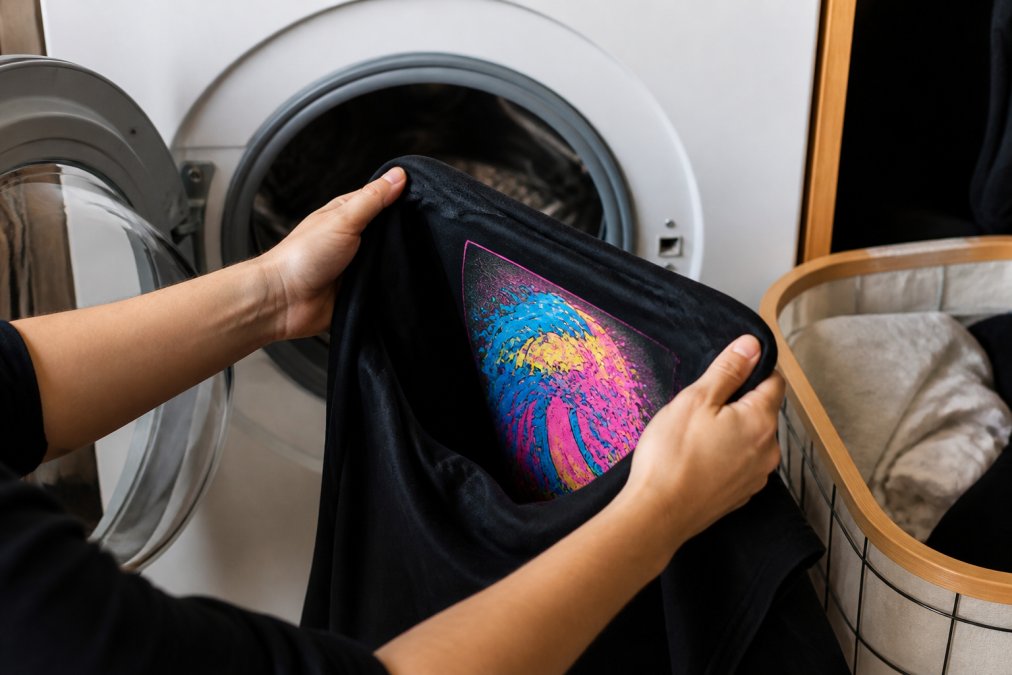
Turn the shirt inside-out before washing. When the print faces inward, the fabric acts as a barrier, reducing direct contact between the print and the washing machine's mechanical action.
Use cold water. Hot water accelerates ink breakdown and can soften plastisol ink, making it more vulnerable to cracking. Cold water cleans effectively while minimizing thermal stress.
Fill the machine with water, add detergent, then add the shirt. Don't overstuff the machine, the shirt needs room to move freely without excessive contact with other items.
Step 2: Use Gentle Detergent and Avoid Bleach
Choose mild detergent. Harsh detergents contain surfactants and enzymes designed to break down oils aggressively, which can degrade ink adhesion (peer-reviewed research). Gentle detergents clean effectively without stripping the ink bond.
Avoid bleach entirely. Bleach breaks down chemical bonds and will fade water-based ink quickly while compromising plastisol ink adhesion. Even oxygen-based alternatives can damage prints.
Skip fabric softeners. They coat fabric fibers with a slippery chemical layer that reduces friction and can cause prints to peel or crack more easily. Use the correct detergent amount, more doesn't clean better and leaves residue that interferes with ink adhesion.
Step 3: Reduce Mechanical Agitation
Select the gentle or delicate cycle on your washing machine. This uses slower spin speeds and shorter agitation periods, reducing mechanical stress on the print.
Wash printed shirts separately from items with zippers, buttons, or rough textures that can snag or rub against the print. Reduce the spin speed if possible, lower spin speeds remove most water while minimizing stress.
Drying Methods That Protect Print Durability
How you dry a printed shirt matters as much as how you wash it. Dryers expose prints to heat and tumbling, two major sources of cracking.
Air Dry and Line Dry Best Practices
Air drying is the safest method. Hang the shirt on a clothesline or drying rack while still inside-out. The fabric dries slowly without heat stress or mechanical tumbling.
Choose a location away from direct sunlight. Sunlight accelerates fading and creates uneven drying stress. A shaded area with air circulation is ideal.
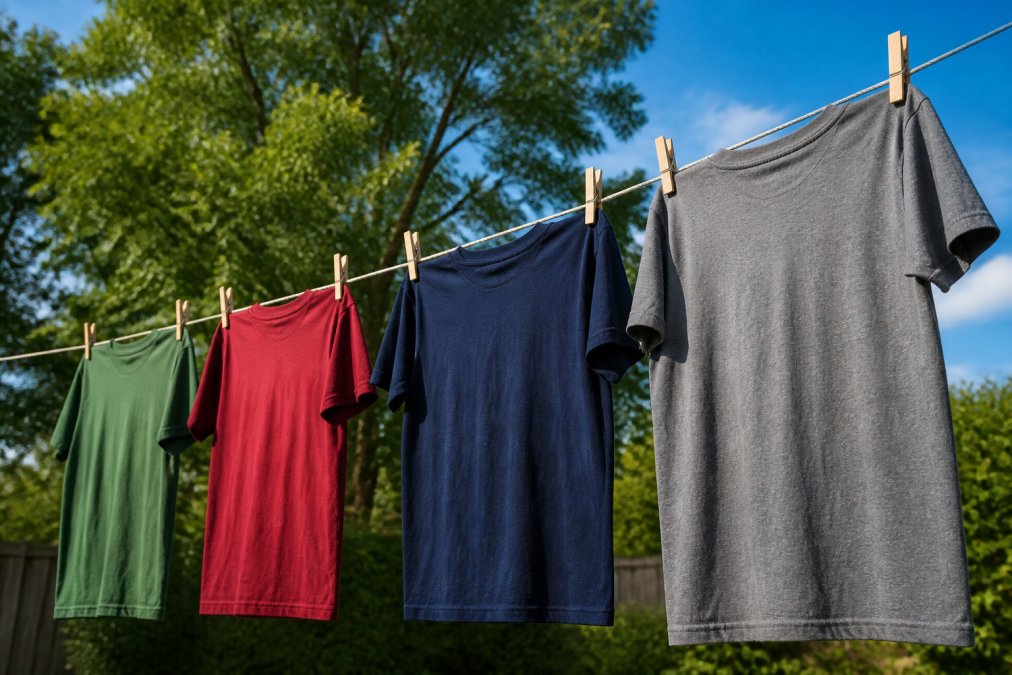
Allow at least 4-6 hours for complete drying. A shirt that dries slowly dries evenly, without stress from rapid moisture loss. Remove the shirt promptly once dry to avoid creasing.
Tumble Dry Settings and Heat Risks
If you must use a dryer, use the lowest heat setting or "air dry" cycle. Set a timer for 30 minutes and remove the shirt while still slightly damp. Finish drying by air drying or laying flat.
Never use medium or high heat. High heat accelerates ink breakdown and causes thermal stress. The combination of heat and tumbling is especially damaging. Remove the shirt as soon as the cycle ends, leaving it in a warm dryer continues heat exposure.
Don't over-dry. If the shirt is already dry, stop. Over-drying makes fabric brittle and prone to stress cracks.
Storage and Handling to Prevent Cracking
Temperature Control and Direct Sunlight
Store printed shirts in a cool, dry location between 65-75°F (the CDC). Temperature fluctuations cause fabric and ink to expand and contract repeatedly, creating microscopic stress that compounds over time.
Avoid direct sunlight. Sunlight fades all inks, especially water-based ones, by breaking down chemical bonds. A shirt stored in a sunny window will fade and crack much faster than one in a closet.
Maintain 40-60% relative humidity (loc.gov). Don't store in plastic bags for extended periods, plastic traps moisture and can promote mildew. Use breathable cotton storage bags or fold the shirt in a closet.
Fold rather than hang for storage longer than a few weeks. Hanging creates constant tension on the fabric, especially at shoulders and neckline. Folding distributes weight evenly.
Fabric Softeners and Their Impact
Never use fabric softeners on printed garments. They coat fabric with silicone or other slippery compounds that reduce friction between ink and fabric fibers, causing the print to lose adhesion and peel or crack.
This applies to both liquid fabric softeners and dryer sheets. If you want softer fabric, use white vinegar in the rinse cycle instead. Vinegar removes detergent residue without coating the fabric or interfering with ink adhesion.
How to Fix Cracked Shirt Designs
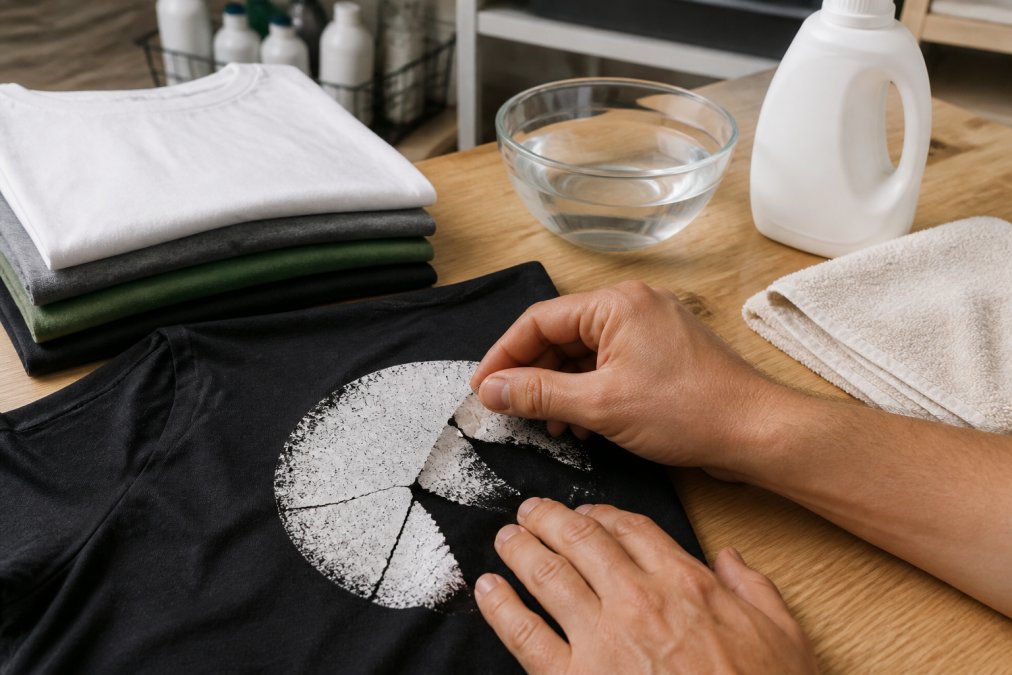
For small cracks that haven't caused ink to flake off, stop using the shirt for heavy activity. Wear it gently, wash minimally, and air dry only. Sometimes small cracks stabilize if you stop stressing the garment.
For prints where ink is actively flaking or peeling, repair is difficult. Small touch-up prints can be applied over damaged areas, but this requires professional equipment. Prevention is far more effective than repair, once cracking begins, underlying damage to ink adhesion is usually irreversible.
Ironing and Heat Safety for Custom Prints
Never iron directly over the print. Iron the back of the garment or the sides. If you must iron the front, place a thin cloth between the iron and the print to diffuse heat.
Use the lowest heat setting. Iron while the garment is still slightly damp, damp fabric conducts heat more evenly and requires less direct heat. Allow the shirt to cool completely before wearing or storing.
Better yet, avoid ironing altogether. A garment steamer at low heat is safer because it applies heat more gently and diffuses it over a wider area.
Best Practices to Extend Print Longevity
Combine all these strategies for maximum protection: wash inside-out in cold water with gentle detergent, air dry or use low-heat drying, store in cool, dry conditions away from direct sunlight, never use fabric softeners or bleach, and avoid ironing.
Rotate your printed shirts. Wearing the same shirt repeatedly accelerates wear. Rotating between multiple garments spreads stress across several pieces, extending the life of each.
Wash less frequently if possible. Every wash stresses the print. If a shirt isn't visibly soiled, airing it out is fine.
When ordering custom apparel, ask about the printing method and ink type. Understanding whether you're getting plastisol or water-based ink helps you tailor your care approach. Action Designs uses screen printing, embroidery, DTG, and DTF, each with slightly different care requirements.
Quality matters at the production stage. Proper curing, correct ink-to-fabric ratios, and experienced printing all affect initial adhesion. A well-produced print cracks more slowly than a poorly produced one, even with identical care.
Cracked prints are preventable. Most cracking results from aggressive washing, heat drying, or poor storage conditions, all within your control. By understanding why prints crack and applying these strategies, you can keep custom shirt prints vibrant and intact for years.
If you're ordering custom apparel for your team, business, or event, the care you provide after delivery determines whether that investment lasts. Action Designs produces durable, high-quality prints using screen printing, DTG, and other proven techniques, but longevity depends on both production quality and proper care. Get a quote and ask about care recommendations specific to your print type, our team can guide you toward the approach that works best for your garments.
Frequently Asked Questions
Why does my custom shirt print peel after just a few washes?
Poor ink adhesion is a primary cause. When prints aren't properly cured during manufacturing, or when garments are washed in hot water with harsh detergents immediately after purchase, the ink can break down and separate from the fabric. Mechanical agitation from regular wash cycles also stresses the bond between ink and textile. Washing inside-out in cold water with gentle detergent and air drying significantly reduces peeling. If you're experiencing this with new shirts, the printing process or curing temperature may have been inadequate.
Can you iron over a custom shirt print?
Direct ironing over prints is risky and not recommended. High heat can soften plastisol ink and cause it to crack or stick to the iron plate. If ironing is necessary, place a thin cloth barrier between the iron and the print, use the lowest heat setting, and avoid pressing directly on the design. For water-based inks, heat damage is even more likely. Air drying and gentle handling can often eliminate the need to iron most custom apparel.
How to prevent print cracking on screen printed shirts during storage?
Store printed shirts in a cool, dry place away from direct sunlight and extreme temperature fluctuations. Fold or hang them gently to avoid creasing the print area. Avoid storing in plastic bags, which can trap moisture and create thermal stress. Keep fabric softeners and bleach away from storage areas, as residue can weaken ink adhesion over time. Proper storage conditions maintain print integrity and can extend garment longevity significantly.
What's the difference between plastisol and water-based inks for durability?
Plastisol inks often create a thicker, more flexible film on the fabric surface. Water-based inks penetrate fabric fibers more deeply and can offer a softer feel. Both require proper care, and their durability can vary based on application and garment type. When ordering custom shirts, asking your printer about the ink type they use can help you tailor your long-term care strategy and understand the expected print lifespan.
This article was written using GrandRanker