 ultimate-guide
How to Choose the Right Fabric for Custom T-Shirts
Table of Contents
- Start With the End Use: Matching Fabric to Your Purpose
- T-Shirt Fabric Weight Guide: GSM and What It Means for Your Order
- Cotton vs Polyester for Custom Shirts: Weighing the Trade-Offs
- How to Prevent Custom Shirt Prints from Cracking: Fabric and Decoration Compatibility
- How to Evaluate Fabric Quality Before You Order
- Climate, Sustainability, and Shrinkage: Factors Most Buyers Overlook
- Conclusion
- Frequently Asked Questions
Last Updated: September 12, 2026
Start With the End Use: Matching Fabric to Your Purpose
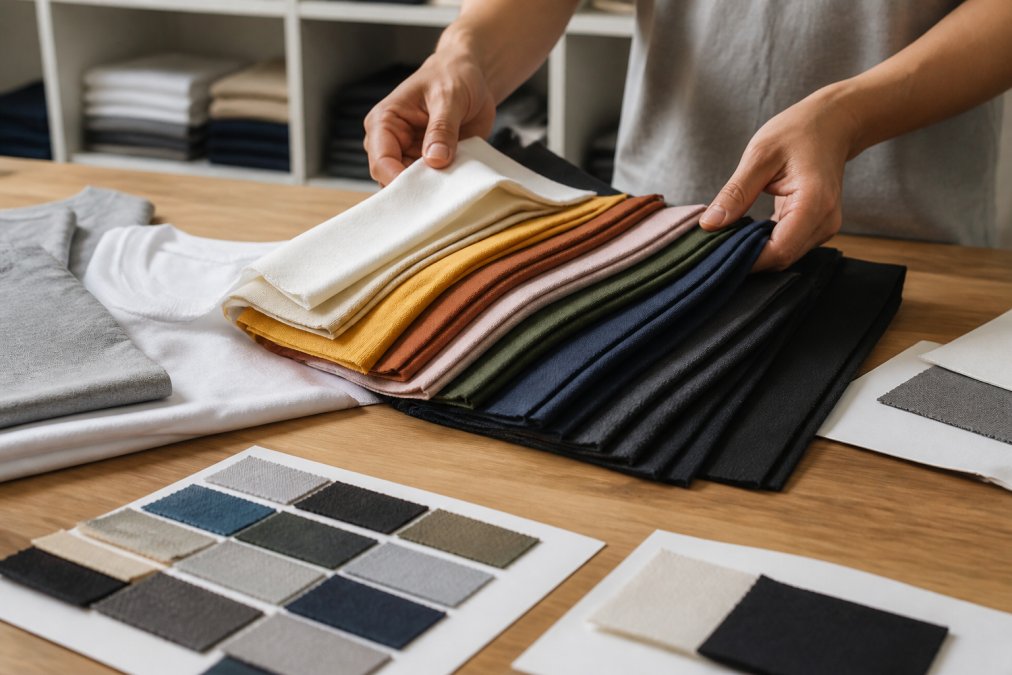
Learning how to choose the right fabric for custom t-shirts starts with one question: where will these shirts actually be worn? A trade show giveaway, a staff uniform, and a retail product all demand different materials. Orders go wrong most often when buyers pick fabric by feel alone and ignore how the shirt will be used. A lightweight jersey that photographs beautifully on a hanger can wilt under a heavy logo or a long workday. Match the fabric to the job first, and every later decision gets easier.
T-Shirt Fabric Weight Guide: GSM and What It Means for Your Order
Fabric weight is measured in GSM, or grams per square meter. It is the single fastest way to compare two shirts before you ever touch them. Higher GSM means denser, heavier fabric; lower GSM means lighter, airier cloth.
| Weight Class | GSM Range | Hand-Feel | Best For |
|---|---|---|---|
| Lightweight | 120-150 GSM | Thin, cool, semi-sheer | Summer events, giveaways |
| Midweight | 150-190 GSM | Balanced, soft, opaque | Retail, uniforms, daily wear |
| Heavyweight | 190+ GSM | Dense, structured, warm | Workwear, premium merch |
Lightweight (120-150 GSM)
These shirts breathe well and cost less, which makes them popular for large one-day events. The trade-off is opacity: light colors can show what's underneath, and thin fabric can distort under a dense print.
Midweight (150-190 GSM)
Midweight is the sweet spot for most orders. It holds a print cleanly, drapes well, and survives regular washing without losing shape. If you are unsure, start here.
Heavyweight (190+ GSM)
Heavyweight cotton has a structured, premium hand-feel that holds up to embroidery and repeated wear. It runs warmer, so it suits fall launches, workwear, and merchandise buyers keep for years.
Cotton vs Polyester for Custom Shirts: Weighing the Trade-Offs
The cotton vs polyester for custom shirts debate has no universal winner. Each fiber changes how the shirt feels, prints, and wears over time. The right pick depends on your decoration method and your audience.
Cotton and Cotton Blends
Cotton is soft, breathable, and takes screen printing ink exceptionally well. Combed and ring-spun cotton remove short fibers for a smoother print surface. Blends add polyester for durability and reduced shrinkage.
- Pros: soft hand-feel, excellent ink absorption, natural fibers, easy to decorate
- Cons: can shrink, wrinkles more, slower to dry
Polyester and Tri-Blend
Polyester wicks moisture and resists shrinking, which suits performance and athletic wear. Tri-blend combines cotton, polyester, and rayon for a soft, heathered look with strong drape.
- Pros: moisture-wicking, durable, holds color, low shrinkage
- Cons: can pill, less breathable in heat, some inks bond differently
How to Prevent Custom Shirt Prints from Cracking: Fabric and Decoration Compatibility
Knowing how to prevent custom shirt prints from cracking comes down to matching ink chemistry to fiber content. Cracking is not random. It is almost always a compatibility problem between the fabric and the decoration method, and it shows up as a web of fine white lines along the print edges after a handful of washes.
Here is the mechanism. Plastisol ink is a PVC-based ink that sits on top of the fabric rather than soaking in. It cures when the entire ink film reaches roughly 320°F. On 100% cotton, the ink film stretches with the garment and holds. On 100% polyester, the ink film is stiffer than the fabric, so every stretch pulls the print apart. Water-based and discharge inks behave differently: they penetrate the fiber and dye or bond with it, which gives a softer hand-feel but only works reliably on cotton and cotton-rich blends. Discharge ink actually removes dye from the cotton and replaces it with pigment, so it will not work on polyester at all (screenprinting.org).
Ink-to-Fabric Compatibility Matrix
| Decoration Method | Best Fabric Match | Works With | Avoid |
|---|---|---|---|
| Plastisol screen print | 100% cotton, cotton-rich blends | 50/50 blends | 100% polyester, tri-blend with high poly content |
| Water-based screen print | 100% cotton, ring-spun cotton | Cotton-poly blends | Dark polyester, coated performance fabrics |
| Discharge screen print | 100% cotton (dyed, not pigment-dyed) | Cotton-rich blends | Any polyester content, tri-blend |
| DTG | 100% cotton, high-cotton blends | 50/50 blends with pre-treatment | Dark 100% polyester without pre-treatment |
| DTF | Cotton, polyester, blends, tri-blend | Almost all fiber contents | Very stretchy performance knits |
| Embroidery | Heavyweight cotton, structured knits | Midweight cotton, fleece | Lightweight jersey, thin tri-blend |
Why Each Method Behaves the Way It Does
- Screen printing (plastisol): Sits on the surface, so it needs a fabric that stretches at a similar rate. Cotton-rich garments stretch less than polyester, which is why plastisol holds up best on cotton.
- DTG: Water-based inkjet ink that bonds to cotton fibers. On dark polyester, the ink needs a pre-treatment liquid to create a receptive layer, or it washes out and fades fast.
- DTF: A printed transfer film that is heat-pressed onto the garment. The adhesive bonds to most fiber contents, which is why it is the most forgiving option for blends and tri-blend.
- Embroidery: Needle and thread punch through the fabric. Thin jersey puckers under dense stitch counts; heavyweight cotton and fleece hold the stitch without distortion.
The common mistake is ordering a lightweight poly shirt for a detailed screen print to save money. The ink cannot anchor, and it cracks within a few washes. If your design has fine detail and your fabric is polyester, DTF or a poly-specific ink is the safer route.
How to Evaluate Fabric Quality Before You Order
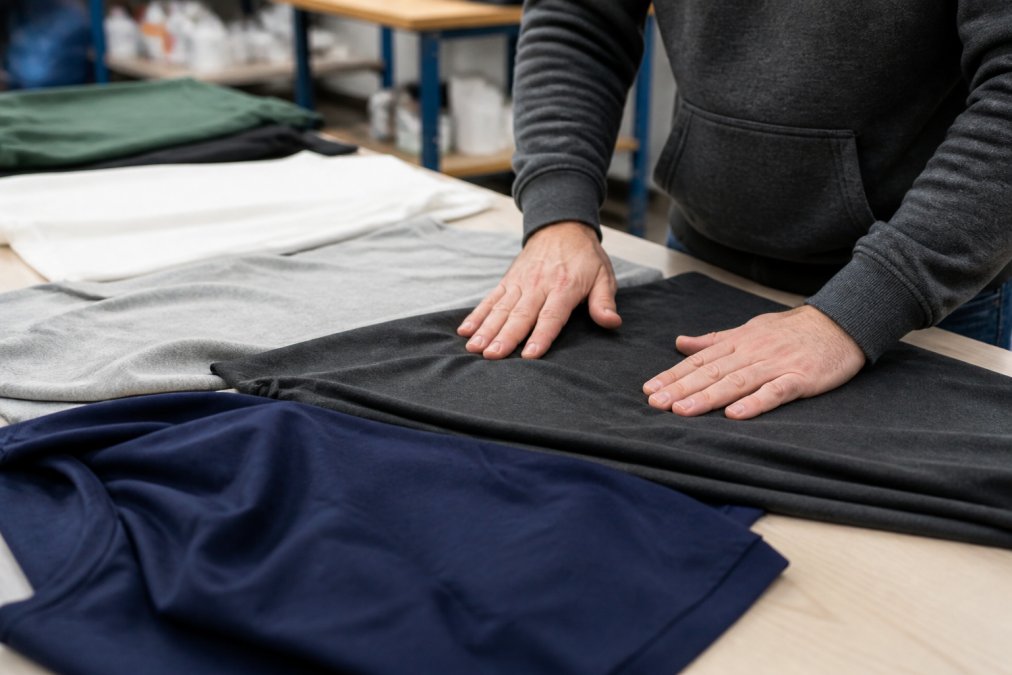
You can judge fabric quality in five minutes with a simple checklist. Use it before you approve any sample.
- Hold the shirt to light: high opacity means denser, better-covering fabric
- Stretch the side seam: it should snap back without staying warped
- Rub the surface: pilling and loose fibers signal lower-grade yarn
- Check the collar: ribbed, reinforced collars keep their shape after washing
- Read the fiber content tag: blends behave differently than 100% cotton
- Feel the hand-feel: combed and ring-spun cotton feel noticeably smoother than carded cotton
A common mistake is approving a sample by sight alone. Touch it, stretch it, and wash it once before you commit to a full run.
Climate, Sustainability, and Shrinkage: Factors Most Buyers Overlook
Most fabric guides stop at cotton versus polyester. The three factors below are where orders actually go wrong.
Climate-Based Fabric Selection
Two shirts with identical fiber content can perform completely differently depending on where they are worn. Match the fabric to the environment, not just the design.
- Hot and humid (Gulf Coast, Southeast summers): Lightweight cotton (120-150 GSM) or a cotton-poly blend with moisture-wicking finish. 100% heavy cotton traps heat and stays damp. Tri-blend dries faster than pure cotton but pills more under friction.
- Hot and dry (Southwest, desert events): Lightweight cotton breathes and evaporates sweat quickly. Polyester wicks but can feel clammy when the air is dry and sweat evaporates before it moves through the fabric.
- Cool and wet (Pacific Northwest, fall launches): Midweight cotton (150-190 GSM) or a cotton-poly blend holds shape under a hoodie or jacket. Lightweight jersey clings when damp.
- Cold (winter merch, workwear): Heavyweight cotton (190+ GSM) or fleece. Embroidery holds better on these weights than on thin jersey.
- Indoor events (conferences, trade shows): Midweight cotton or tri-blend. Air conditioning keeps the room cool, so breathability matters less than print quality and hand-feel.
Shrinkage Rates by Fiber
Shrinkage is the quiet problem that turns a perfect size run into a customer service issue. The mechanism is simple: cotton fibers relax and contract when exposed to heat and moisture, and they do not fully recover.
| Fiber Content | Typical Shrinkage (First Wash) | Notes |
|---|---|---|
| 100% cotton (not pre-shrunk) | 5-8% length, 3-5% width | Worst offender; hot water and high dryer heat accelerate it (peer-reviewed research) |
| 100% cotton (pre-shrunk / garment-dyed) | 2-3% | Still shrinks slightly with repeated hot washes |
| 50/50 cotton-poly | 2-4% | Polyester content stabilizes the fabric |
| 100% polyester | Under 1% | Heat-set during manufacturing |
| Tri-blend (cotton/poly/rayon) | 2-4% | Rayon adds softness but can shrink unevenly |
If exact sizing matters, uniforms, retail, or anything with a size chart, choose pre-shrunk or blended fabrics, and wash samples once in hot water before you commit to a full run. A shirt that fits perfectly out of the bag can be a full size smaller after one hot wash and dry cycle.
Sustainability and Eco-Friendly Fabrics
Eco-conscious buyers and corporate sourcing policies increasingly require documented fiber sourcing. The three options that come up most often:
- Organic cotton: Grown without synthetic pesticides and certified through the USDA Organic program or the Global Organic Textile Standard (GOTS). Prints and dyes the same as conventional cotton, so decoration is not a barrier.
- Recycled polyester: Made from post-consumer plastic bottles, often certified through the Global Recycled Standard (GRS). Behaves like virgin polyester for moisture-wicking and durability, but dye lots can vary more.
- Bamboo and lyocell: Soft, breathable, and fast-drying, but they shrink and pill more than cotton and can be harder to decorate with plastisol. Best for low-detail prints or DTF.
Ask your supplier for the certification documentation, not just the marketing claim. "Eco-friendly" on a product page means nothing without a certificate number you can verify.
Conclusion
Choosing fabric is where custom apparel orders succeed or fail, and the wrong call shows up as cracked prints, shrunken shirts, and unhappy wearers. Action Designs takes the guesswork out of it by supplying garments or decorating your own, with screen printing, embroidery, DTG, and DTF under one roof. We scale from a single sample to full collections and match the right method to your fabric. Get a quote from Action Designs and start your order with fabric you can trust.
Frequently Asked Questions
What is the best fabric for t-shirt printing?
There is no single best fabric for every project. Ring-spun combed cotton works well for screen printing and DTG because its smooth surface accepts ink evenly. Polyester and tri-blend fabrics suit athletic or performance designs. The right fabric depends on your decoration method, intended use, and how the shirt will be washed. A fabric weight between 150 and 190 GSM handles most custom printing needs well.
Is 100% cotton or 50/50 better for custom shirts?
It depends on the decoration method and how the shirt will be worn. Cotton takes screen printing and DTG ink well, feels soft, and breathes. A 50/50 polyester-cotton blend resists shrinking and holds up longer in repeated industrial washing. For uniforms that get washed frequently, a blend is often more practical. For retail-style softness and vibrant prints, cotton is usually the better pick.
How does fabric weight affect custom apparel quality?
Fabric weight, measured in GSM, affects how a shirt drapes, how opaque it is, and how well it holds a print. Lightweight fabrics under 150 GSM feel cool but can be semi-sheer and may not support heavy ink coverage. Midweight fabrics between 150 and 190 GSM balance comfort and printability. Heavyweight fabrics above 190 GSM hold shape well and work for structured or premium-feeling garments.
Does fabric choice impact the durability of screen prints?
Yes. Ink bonds differently to cotton, polyester, and blends. Cotton fibers absorb plastisol ink, creating a mechanical bond that resists cracking when cured properly. Polyester requires low-bleed inks and lower curing temperatures because dye can migrate. On blends, the ink sits differently across fiber types, which can affect wash-fastness. Matching ink type to fiber content is one of the most reliable ways to prevent cracking.