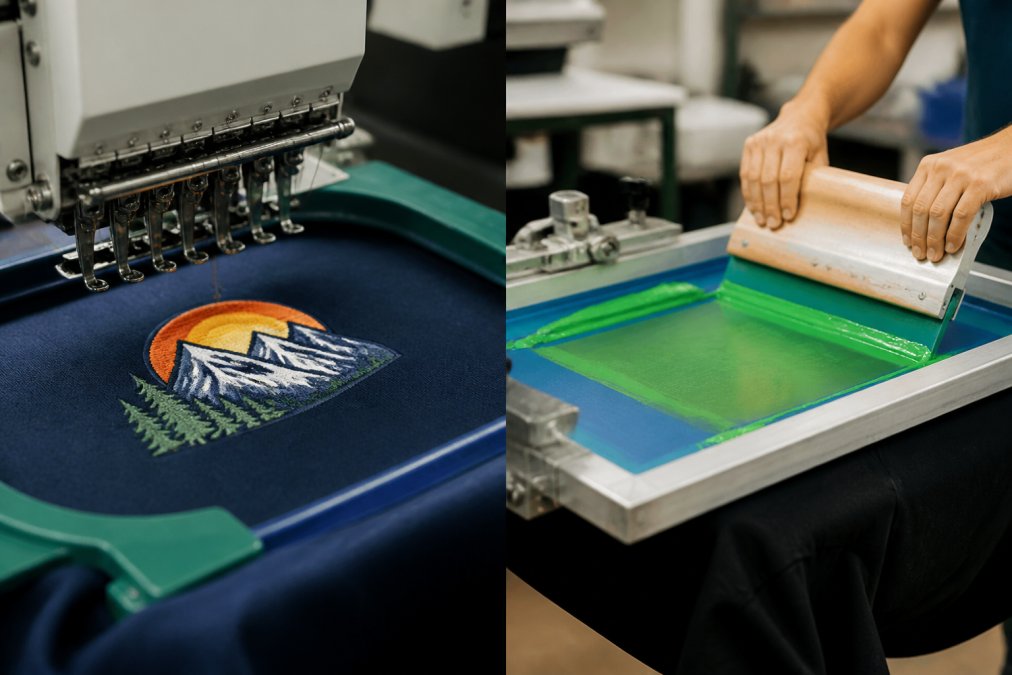
 comparison
Embroidery vs Screen Printing: Choose the Right Method
Table of Contents
- What Is Screen Printing and Embroidery?
- Key Differences Between Embroidery and Screen Printing
- Cost of Embroidery vs Screen Printing
- Embroidery Design Limitations and Capabilities
- Best Apparel for Screen Printing
- Durability, Maintenance, and Longevity
- How to Choose the Right Method for Your Project
- Frequently Asked Questions
Last Updated: September 3, 2026
What Is Screen Printing and Embroidery?
Screen printing and embroidery are the two dominant methods for decorating custom apparel, each with distinct techniques and results.
Screen printing pushes ink through a fine mesh screen onto fabric. Each color requires a separate screen, and the ink sits on top of the fabric, creating vibrant, flat designs with excellent color matching. This method works well for bold graphics and logos with solid colors.
Embroidery stitches thread directly into fabric using a computerized machine, creating a raised, three-dimensional texture. It produces a premium feel and exceptional durability, making it ideal for professional uniforms, hats, and jackets.
The choice between these methods depends on matching the technique to your design, fabric, quantity, and budget. A logo with fine details might demand embroidery. A large order of t-shirts with a bold design might favor screen printing.
Key Differences Between Embroidery and Screen Printing
Design Approach
Screen printing works best with bold, simplified designs and solid colors. Fine details and thin lines can become blurry during the printing process. Embroidery handles detail differently through digitizing, which converts your design into stitch instructions. It can capture fine details but has practical limits, extremely thin lines can disappear, and intricate designs with many colors become expensive.
Fabric Compatibility
Screen printing works on almost any fabric: cotton, polyester, blends, and synthetics. Embroidery requires sturdy fabrics like cotton, denim, or canvas. Lightweight fabrics can pucker or distort under stitching tension.
Production Speed and Volume
Screen printing becomes more cost-effective at higher volumes. Setup involves creating screens for each color; once ready, printing individual shirts is fast. Embroidery has minimal setup, just digitizing the design once, making small runs economical. A single embroidered shirt costs roughly the same whether you're ordering one or ten.
Visual and Tactile Result
Screen printing produces a flat, smooth finish with vibrant colors. Embroidery creates a raised, textured finish that conveys premium quality and catches light differently than flat printing.
Cost of Embroidery vs Screen Printing
Screen Printing Economics
Screen printing has upfront setup costs for creating screens, one for each color. Once screens are made, the per-unit cost drops significantly as you print more shirts. This favors bulk orders, a run of 500 shirts spreads setup costs across many units, lowering per-shirt price. Many screen printers set minimum order quantities around 12-15 units. For orders of 200+ units, screen printing typically becomes the most cost-effective option.
Embroidery Economics
Embroidery has minimal setup, digitizing your design happens once, regardless of order size. The embroidery machine then stitches each garment individually. Because there's no per-color screen to create, small orders don't carry a penalty. Ordering five embroidered polos costs roughly the same per unit as ordering fifty. For large orders, embroidery becomes more expensive per unit than screen printing.
Practical Pricing Guidance
For accurate pricing, contact custom apparel providers directly. Pricing varies based on garment type, fabric quality, design complexity, and production capacity. Action Designs offers both methods with flexible pricing for orders ranging from single shirts to full collections.
Embroidery Design Limitations and Capabilities
What Embroidery Handles Well
Embroidery excels at logos with moderate complexity, text, and designs that benefit from dimension. Clean lines, solid shapes, and text with reasonable font sizes all stitch beautifully. Color variation is handled through thread changes, each color requires the machine to pause and switch spools. Most embroiderers recommend keeping designs to 5-8 thread colors for efficiency. Embroidery shines on apparel where the raised, textured finish adds value: polo shirts, hats, jackets, and uniforms.
What Embroidery Struggles With
Very fine lines, thinner than 1/16 inch, often disappear during stitching. Photographic images don't work in embroidery. Designs with many thin lines can create puckering or distortion, especially on lighter-weight fabrics. Small text below 1/4 inch tall won't read clearly. Script fonts and thin typefaces are riskier than bold, simple fonts.
The Digitizing Process
Before embroidery happens, your design must be digitized, converted into stitch instructions the embroidery machine understands. Good digitizing considers stitch direction, density, and underlay stitches that stabilize the design. A design that looks perfect as artwork might need adjustment during digitizing to stitch cleanly. Digitizing costs vary based on design complexity and is a one-time expense.
Best Apparel for Screen Printing
Optimal Garment Types
T-shirts and cotton basics are the classic choice for screen printing. Cotton absorbs ink well, and the flat surface provides an ideal canvas. Polyester blends work equally well. Hoodies, sweatshirts, and fleece are excellent for screen printing. Tote bags, canvas aprons, and other non-apparel items work too.
Fabric Considerations
Fabric weight matters minimally for screen printing. Lightweight fabrics accept ink without problem, as do heavy fabrics like denim. Smooth fabrics produce crisp, clean prints. Textured fabrics like heather knits can create interesting visual effects as ink interacts with raised fibers.
Design Placement
Screen printing works on any garment area: front, back, sleeves, or pant legs. Large designs work well on the front or back of shirts. Smaller designs suit sleeves or chest placement.
Bulk Orders and Merchandise
Screen printing is the standard method for bulk merchandise and corporate branding. When you need hundreds of branded t-shirts for a trade show or employee uniforms, screen printing delivers cost-effective, professional results. Action Designs handles bulk screen printing orders with consistent quality and reliable turnaround.
Durability, Maintenance, and Longevity
Screen Printing Durability
Screen printing creates a durable finish when done properly. Quality inks, whether plastisol or water-based, withstand repeated washing and wear. Plastisol inks are extremely durable and resist fading. Water-based inks offer a softer hand feel and are more environmentally friendly. Screen-printed designs can crack or peel if the ink isn't properly cured or if the garment is subjected to excessive heat or stretching. High-quality screen printing, combined with normal care, lasts for years.
Embroidery Durability
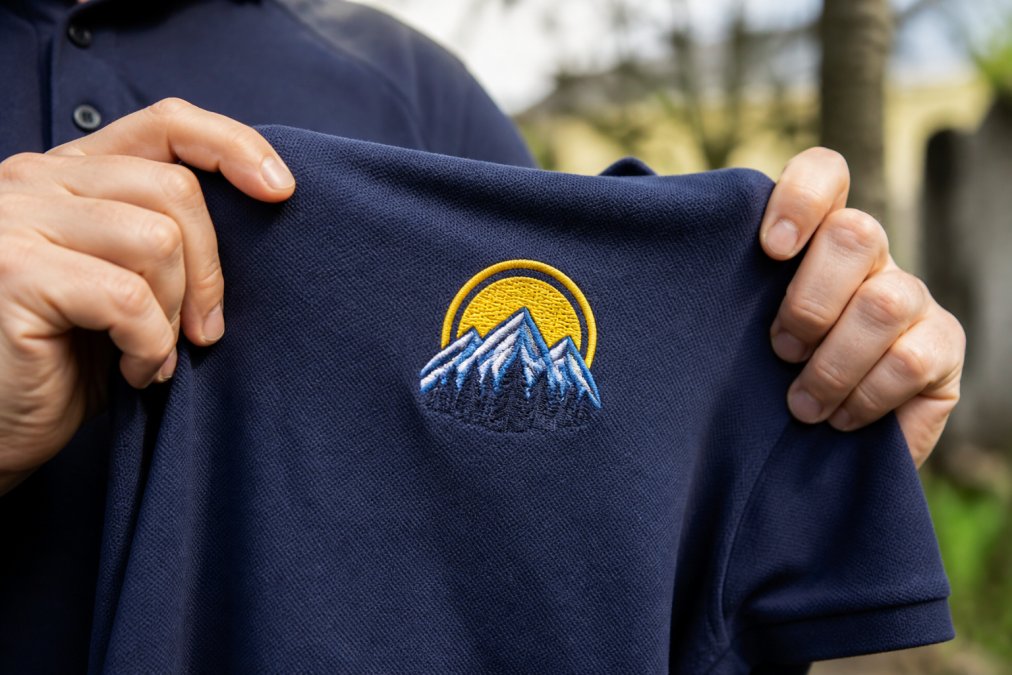
Embroidery is exceptionally durable. Thread is physically stitched into fabric, creating a mechanical bond that doesn't fade or crack like printed ink. Embroidered designs outlast screen-printed ones under identical conditions. The only vulnerability is thread breakage from excessive abrasion. Under normal wear, embroidery is essentially permanent. This is why it's preferred for uniforms and corporate apparel meant to represent a brand over the long term.
Care and Maintenance
Screen-printed garments should be washed in cool or warm water, not hot. Wash inside-out to protect the printed design. Avoid bleach and harsh detergents. Air drying is gentler than machine drying. Embroidered garments benefit from similar care: cool water, inside-out washing, and air drying. Both methods benefit from proper storage in cool, dry conditions.
Long-Term Value
For garments worn frequently or needing to last years, embroidery offers superior longevity. For promotional merchandise or event apparel, screen printing provides excellent durability at lower cost.
How to Choose the Right Method for Your Project
1. Design Complexity
Simple, bold logos with few colors? Screen printing is efficient. Designs with fine detail or moderate color variation? Embroidery might be better. Photographic images? Direct-to-garment (DTG) printing is the better choice.
2. Order Quantity
Small orders (1-50 units) favor embroidery. Large orders (200+ units) favor screen printing. For mid-range quantities (50-200 units), compare quotes from both methods.
3. Garment Type and Fabric
Embroidery works best on sturdy fabrics: cotton, denim, canvas, and heavier knits. Screen printing works on virtually any fabric. If your garment is delicate or lightweight, screen printing is safer. If you're decorating hats, jackets, or polos, embroidery's premium feel adds value.
4. Budget and Timeline
Embroidery requires digitizing, a one-time cost. Screen printing requires screen creation. For quick turnaround on bulk orders, screen printing is faster. For quick turnaround on small orders, embroidery is competitive. For budget-conscious projects with large quantities, screen printing wins.
5. Durability and Longevity
If the garment must last years and maintain appearance through frequent washing, embroidery is superior. If the garment is promotional or event-specific, screen printing is adequate and more economical.
| Factor | Screen Printing | Embroidery |
|---|---|---|
| Design complexity | Best for bold, simple designs | Best for moderate detail and texture |
| Small orders (1-50) | Higher per-unit cost | Lower per-unit cost |
| Large orders (200+) | Lower per-unit cost | Higher per-unit cost |
| Fabric compatibility | Works on almost any fabric | Requires sturdy fabrics |
| Durability | Excellent with proper care | Superior, lasts longer |
| Setup time | Requires screen creation | Minimal, just digitizing |
| Best garment types | T-shirts, hoodies, basics | Polos, hats, jackets, uniforms |
| Visual result | Flat, vibrant, smooth | Raised, textured, premium feel |
Choosing between embroidery and screen printing depends on your design, quantity, budget, and how long the garment needs to perform. Screen printing excels for large orders and bold designs. Embroidery delivers durability and premium appearance for professional apparel and smaller runs.
Action Designs works with both methods and can guide you toward the right choice for your needs. Whether you're outfitting a team of 50, creating promotional merchandise, or designing custom apparel for a personal event, we have the expertise and equipment to deliver professional results. Get a quote today to explore your options and find the perfect method for your project.
Frequently Asked Questions
What's the main difference between embroidery and screen printing?
Screen printing applies ink to fabric through mesh screens, creating flat, vibrant designs ideal for bold graphics and multiple colors. Embroidery stitches thread directly into fabric, producing a raised, textured finish perfect for logos and professional branding. Screen printing works best for large orders and detailed artwork, while embroidery excels on structured garments like polos and hats.
Is embroidery more expensive than screen printing?
Generally, embroidery has higher per-unit costs, especially for small orders, due to setup and digitizing fees. Screen printing becomes cost-effective at higher quantities but has minimum order requirements. Pricing depends on quantity, design complexity, and garment type, get a quote to compare for your specific project.
Which method lasts longer after washing?
Both methods are durable when applied correctly. Screen printing with quality plastisol or water-based ink resists fading and cracking through normal washing if cured properly. Embroidery's stitched construction provides excellent wash resistance and won't fade, though threads can fray if stitch density is too low. Proper garment care, washing inside-out, cold water, gentle cycles, extends the life of both methods significantly.
Can embroidery handle the same level of detail as screen printing?
No. Embroidery has design limitations due to thread thickness and stitch density requirements. Fine lines, small text, and intricate details often become blurry or distorted in embroidery. Screen printing handles complex artwork, photographic images, and fine detail much better. Embroidery excels with bold, simple logos and text.
This article was written using GrandRanker