 ultimate-guide
Custom Apparel for Corporate Campaigns: A 2026 Guide
Table of Contents
- Why Custom Apparel Drives Corporate Brand Visibility
- Screen Printing vs Embroidery for Corporate Gear: Which Technique Fits Your Campaign
- How to Streamline Custom Design Revisions and Reduce Approval Cycles
- Selecting Premium Apparel Brands for Your Corporate Identity
- Measuring Promotional Merchandise ROI: What Actually Moves the Needle
- Bulk Ordering Strategy: Volume Discounts and Cost Management
- Care and Longevity: Ensuring Your Custom Apparel Lasts
- Conclusion
Last Updated: August 28, 2026
Why Custom Apparel Drives Corporate Brand Visibility
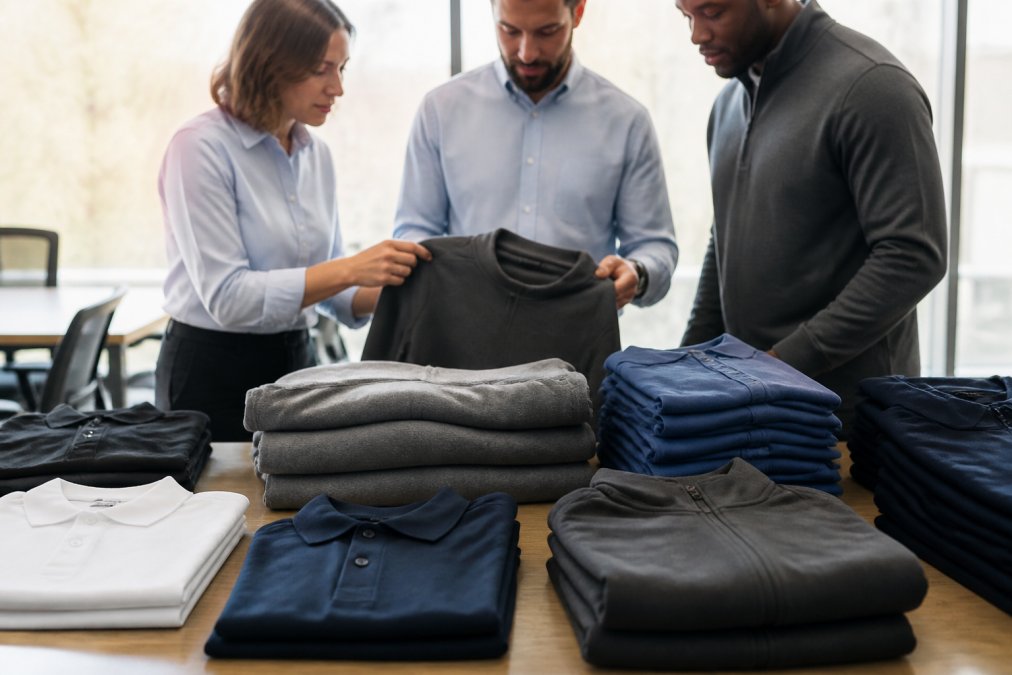
Custom apparel is one of the most cost-effective ways to build brand recognition, create team cohesion, and generate lasting impressions at trade shows and corporate events. Unlike digital ads that disappear in seconds, physical apparel stays visible for months or years. A well-made hoodie or polo becomes part of someone's regular rotation, turning your brand into ambient presence rather than intrusive marketing.
What separates effective campaigns from forgettable ones is execution: decoration technique, fabric quality, and the design approval process. At Action Designs, we empower brands and individuals to bring their unique visions to life through high-quality, durable custom apparel and promotional items. This guide covers the decisions that move the needle: which decoration techniques deliver the best results for your volume, how to avoid design revision delays, and how to measure whether your investment is actually working.
Screen Printing vs Embroidery for Corporate Gear: Which Technique Fits Your Campaign
The choice between screen printing and embroidery depends on your specific goals, budget, and volume.
Screen printing excels at high-volume orders and bold, colorful designs. When you need 500 t-shirts for a trade show with a vibrant multi-color logo, screen printing delivers consistent results at the lowest per-unit cost. The process involves pushing ink through a mesh screen onto fabric.
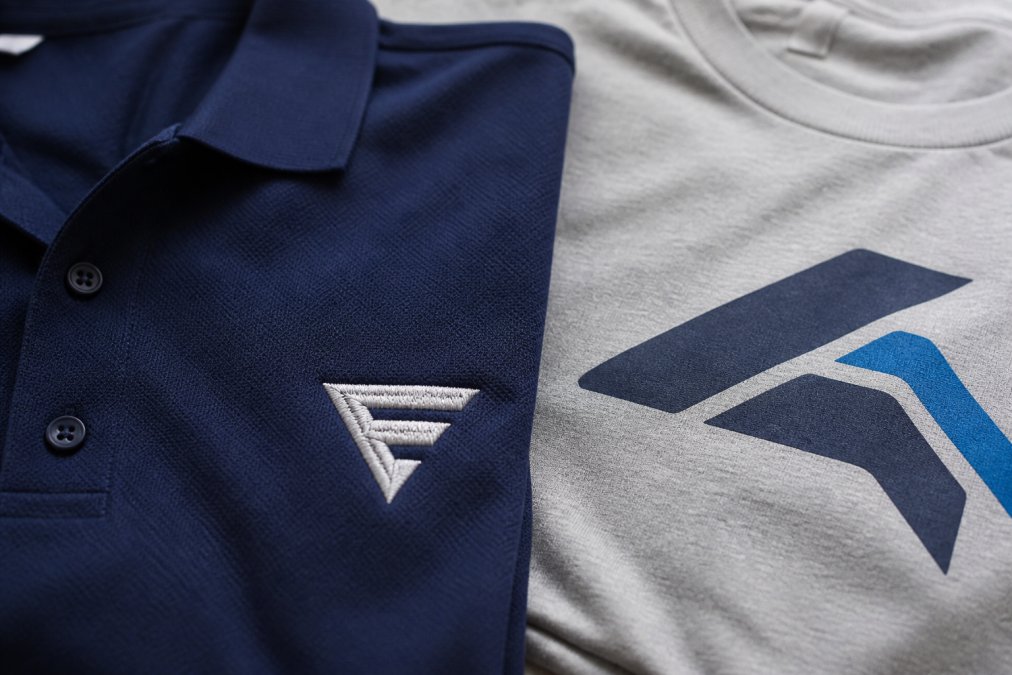
The trade-off: screen printing doesn't handle fine detail well. If your logo has thin lines or intricate gradients, the design will simplify. Setup costs are higher per design, so you need sufficient volume to justify the investment. Most screen printers require minimum orders of 50-100 units per design.
Embroidery projects premium quality. An embroidered logo on a polo or jacket signals durability in a way screen printing doesn't. The stitching won't crack or fade like a print can. For corporate uniforms, embroidery is the standard because it withstands repeated washing and maintains appearance for years.
The constraint: embroidery is slower and more expensive per unit, especially on small orders. You're paying for precision needlework. If you need 50 shirts for your team, embroidery makes sense. If you need 2,000 for a conference giveaway, the per-unit cost becomes prohibitive.
Screen Printing for High-Volume Orders
Screen printing is your answer when volume is high and budget per unit matters. A run of 500+ units brings the per-shirt cost down dramatically. The process requires creating separate screens for each color in your design, with setup costs of $50-100 per color screen. At 500 units, that's cents per shirt. At 50 units, it's dollars per shirt.
One critical detail: the order of colors matters. Screen printers work from lightest to darkest ink, and the substrate affects how colors appear. Request sample shirts before committing to the full run.
Embroidery for Premium Brand Perception
Embroidery signals quality and lasts through hundreds of washes. The technique uses a computerized embroidery machine that follows a digitized version of your logo. Simple logos with clear lines digitize cleanly; complex designs with fine detail require skilled digitization to avoid a blurry result.
Embroidery works best on structured garments: polos, jackets, caps, and structured bags. It's less practical on t-shirts because the fabric is too loose. Setup time is shorter than screen printing, making embroidery viable for smaller orders of 20+ units.
Heat Transfer and DTG for Complex Designs
Heat transfer uses a pre-printed design on transfer paper, pressed onto fabric using heat and pressure. It handles photographic images and complex color gradients well and is faster than screen printing for small to medium runs (10-200 units).
DTG (direct-to-garment) printing prints directly onto the garment using specialized inkjet technology. You can print full-color, photographic designs with no setup cost. Each shirt is printed individually, so you can order just one unit if needed. The trade-off: DTG prints don't feel as durable as screen printing or embroidery. The ink sits on top of the fabric rather than being absorbed into it, which means it can crack or fade with repeated washing.
How to Simplify Custom Design Revisions and Reduce Approval Cycles
Design revisions consume weeks. Stakeholders request changes. Approvals get stuck in email chains. Suddenly your 3-week turnaround becomes 8 weeks.
The problem starts with unclear expectations. Lock the design parameters before any artwork gets created. Specify exactly where the logo goes, how large it is, which colors are used, and what the final product will look like. Use a mockup or sample as your reference point, not a description.
Create a design brief document that includes visual references, exact logo files, color specifications, and approved mockups. Share this with everyone involved before work begins. This document becomes your single source of truth. When someone requests a change mid-project, reference the brief and ask whether this change was in the original scope.
Request physical samples early. Not digital mockups, actual garments with your design applied. A color that looks perfect on your monitor might look completely different on the actual fabric. Seeing a sample polo with your embroidered logo before committing to 500 units prevents costly mistakes.
Set a revision limit. Specify that you'll accommodate two rounds of revisions, then changes become change orders. This creates urgency around feedback and prevents endless tinkering.
Selecting Premium Apparel Brands for Your Corporate Identity
Not all blank apparel is created equal. A $3 t-shirt from a discount supplier will feel and perform differently than a $12 premium blank. For corporate campaigns, the blank quality directly impacts how your brand is perceived.
Premium brands like Gildan, Hanes Beefy-T, and specialty manufacturers focus on fabric weight, construction, and durability. A heavier weight (6.1 ounces versus 4.3 ounces) feels more substantial and lasts longer (peer-reviewed research). Better construction means seams that don't unravel and hems that hold their shape through dozens of washes.
If you're spending $500 on design and decoration, don't cheap out on the base garment. A low-quality blank will disappoint the wearer and damage your brand perception. A quality blank gets worn repeatedly and delivers long-term brand exposure.
Consider fit and sizing. Different manufacturers cut their garments differently. If your team has a mix of body types, you need a brand that offers a range of sizes and cuts.
For premium positioning, look for brands known for quality construction. For high-volume giveaways where durability matters less than cost efficiency, a mid-tier blank makes sense. Match the blank quality to your campaign goals and budget.
Measuring Promotional Merchandise ROI: What Actually Moves the Needle
Most companies order custom apparel, distribute it, and assume it's working. They never measure whether the investment actually delivered returns.
Start with a clear objective. Are you trying to increase brand awareness? Improve employee morale? Generate leads at a trade show? Your measurement approach depends on what you're actually trying to achieve.
For trade show giveaways, track how many leads you generate and what percentage converts to customers. If you spent $2,000 on branded apparel giveaways and generated 50 leads that converted to $15,000 in revenue, that's a 7.5x return.
For employee uniforms or team wear, measure engagement and retention. Teams that wear branded apparel report higher cohesion (apa.org). This translates to lower turnover and higher productivity.
For customer appreciation items, track brand recall. Survey customers who received your branded apparel and ask whether they remember your brand. Compare this to a control group that didn't receive anything.
The mistake most teams make is ordering without a distribution strategy. Custom apparel only generates ROI if it's in people's hands and being used. Plan your distribution before you order.
Bulk Ordering Strategy: Volume Discounts and Cost Management
Volume discounts are real, but they're not linear. The savings between 50 and 100 units might be 10%. Between 100 and 250 units might be another 15%. Understanding the pricing tiers for your specific order prevents overspending.

Request detailed pricing at multiple volume levels before committing. A good supplier will provide a tiered quote showing exactly where the price breaks occur.
One strategic consideration: is it better to order one large batch or multiple smaller batches? A single order of 500 units costs less per unit than five orders of 100 units. But a single order ties up capital and requires storage space. Smaller batches offer flexibility at a higher per-unit cost.
For ongoing programs, consider a standing order arrangement. Some suppliers offer locked-in pricing if you commit to regular orders over a year.
Timing matters. Order during off-peak seasons (January-March and September-October) and you might negotiate better pricing or faster turnaround.
Don't confuse lowest price with best value. Request references from other corporate clients. A slightly higher price from a reliable supplier often saves money by avoiding reprints or expedited shipping.
Care and Longevity: Ensuring Your Custom Apparel Lasts
A custom apparel campaign fails if the garments fall apart after a few washes.
For screen-printed apparel, the enemy is heat and agitation. High-heat dryers can cause ink to crack. Washing in hot water with harsh detergents accelerates fading. Quality screen printing uses plastisol ink, which bonds to the fabric when cured properly. Poor curing results in ink that flakes off after a few washes. Inspect the printed design on a sample: does the ink feel like it's part of the shirt, or does it feel like a coating on top?
Embroidery is more durable than screen printing if done correctly. The thread is sewn into the fabric, not applied on top. It won't crack or fade. Quality embroidery on a structured garment will last for years.
DTG printing is the weakest in terms of durability. The ink sits on top of the fabric and can crack with repeated washing. Communicate care requirements clearly: these garments need gentle washing and air drying.
Fabric weight and construction affect longevity independent of decoration. A 6.1-ounce cotton t-shirt will outlast a 4.3-ounce version by years. Reinforced seams hold better than single-stitched seams.
Provide care instructions to wearers. Include a tag or send an email explaining how to wash and dry the apparel to maximize longevity.
Custom apparel for corporate promotional campaigns works when three things align: the right decoration technique for your design and volume, a simplified approval process, and garments that actually last through regular use. The investment in quality blanks, skilled decoration, and clear communication pays off in brand visibility and team engagement. Get in touch with Action Designs to discuss your corporate apparel needs. GET A QUOTE to explore how we can bring your custom apparel vision to life.
=== FAQ ANSWERS (audit these too, same rules) ===
[1] Q: How do I know custom apparel printing will hold up after washing? A: Quality depends on decoration technique and fabric choice. Screen printing bonds ink directly into fibers, making it durable. Embroidery creates mechanical durability through thread anchoring. Heat transfer and DTG methods vary by supplier expertise and ink quality. Request sample washes from your vendor before committing to large orders. Ask about their quality guarantees and whether they test finished products for color fastness and adhesion.
[2] Q: What's the real difference between screen printing and embroidery for corporate gear? A: Screen printing works best for multi-color logos on cotton and cotton blends, offering vibrant color and cost efficiency at high volumes. Embroidery suits premium pieces like polos and jackets, creating a professional, tactile finish that signals quality. Embroidery handles smaller volumes efficiently but costs more per unit. Heat transfer and DTG bridge the gap for complex designs and low minimums. Choose based on your apparel type, design complexity, quantity, and brand perception goals.
[3] Q: How can I measure the ROI of promotional merchandise campaigns? A: Track three metrics: cost per impression (total campaign cost divided by items distributed), lead generation (QR codes or unique URLs on apparel linking to landing pages), and brand recall (survey recipients 30-60 days post-distribution asking if they remember your brand). Wearable apparel generates more impressions than single-use items because recipients wear it repeatedly. Compare cost per impression against your digital advertising spend to justify the investment.
[4] Q: How do I prevent color matching issues between samples and final shipments? A: Request color-matched samples in the exact fabric and decoration method you're ordering. Specify Pantone or CMYK values in writing rather than relying on screen colors. Ask your vendor about their color management process and whether they use spectrophotometry to verify matches. Inspect samples under natural and indoor lighting since colors shift under different light sources. Approve samples before production begins, and confirm the vendor will re-produce if final shipment colors don't match approved samples.
Frequently Asked Questions
How do I know custom apparel printing will hold up after washing?
Quality depends on decoration technique and fabric choice. Screen printing bonds ink directly into fibers, making it durable. Embroidery creates mechanical durability through thread anchoring. Heat transfer and DTG methods vary by supplier expertise and ink quality. Request sample washes from your vendor before committing to large orders. Ask about their quality guarantees and whether they test finished products for color fastness and adhesion.
What's the real difference between screen printing and embroidery for corporate gear?
Screen printing works best for multi-color logos on cotton and cotton blends, offering vibrant color and cost efficiency at high volumes. Embroidery suits premium pieces like polos and jackets, creating a professional, tactile finish that signals quality. Embroidery handles smaller volumes efficiently but costs more per unit. Heat transfer and DTG bridge the gap for complex designs and low minimums. Choose based on your apparel type, design complexity, quantity, and brand perception goals.
How can I measure the ROI of promotional merchandise campaigns?
Track three metrics: cost per impression (total campaign cost divided by items distributed), lead generation (QR codes or unique URLs on apparel linking to landing pages), and brand recall (survey recipients 30-60 days post-distribution asking if they remember your brand). Wearable apparel generates more impressions than single-use items because recipients wear it repeatedly. Compare cost per impression against your digital advertising spend to justify the investment.
How do I prevent color matching issues between samples and final shipments?
Request color-matched samples in the exact fabric and decoration method you're ordering. Specify Pantone or CMYK values in writing rather than relying on screen colors. Ask your vendor about their color management process and whether they use spectrophotometry to verify matches. Inspect samples under natural and indoor lighting since colors shift under different light sources. Approve samples before production begins, and confirm the vendor will re-produce if final shipment colors don't match approved samples.
This article was written using GrandRanker