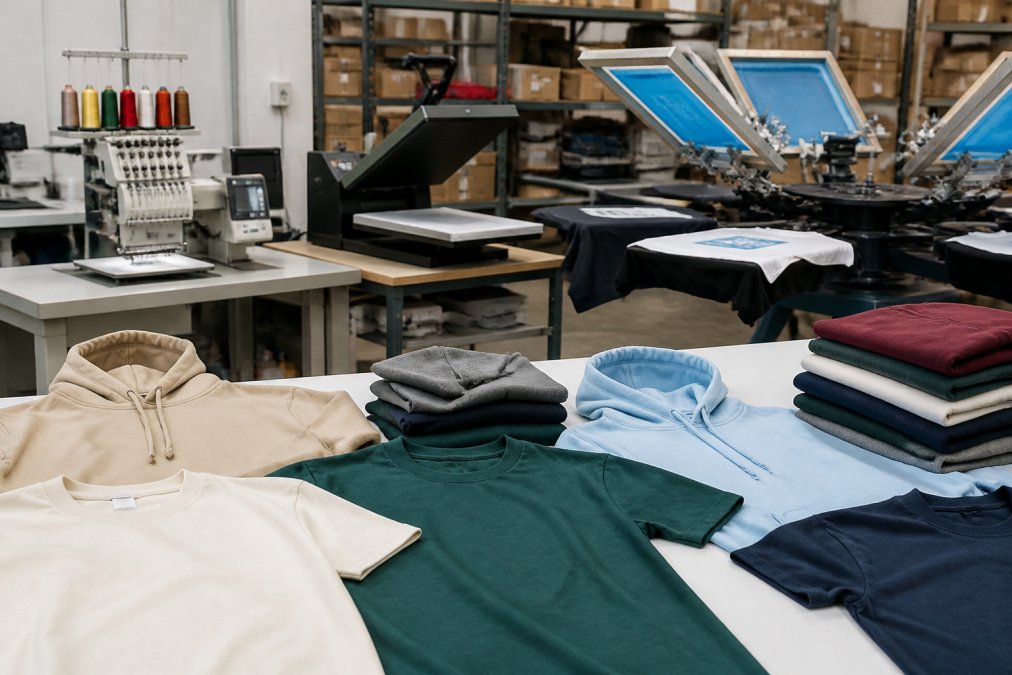
 listicle
Threadbird Alternatives for Custom Apparel
Table of Contents
- Why Businesses Switch From Threadbird
- Quick Comparison: Top Custom Apparel Alternatives
- How to Choose a Custom Apparel Partner
- DTG vs Screen Printing: Choosing Your Production Method
- Custom Apparel Companies With No Minimums
- Print-on-Demand vs. Bulk Screen Printing: What Works When
- Key Factors: Turnaround Times, Pricing, and Minimums
- Conclusion
- Frequently Asked Questions
Last Updated: August 31, 2026
Why Businesses Switch From Threadbird
When managing a team, coordinating an event, or building a brand identity, your custom apparel provider directly impacts timeline, budget, and product quality. Threadbird serves a specific market well, but it's not the only option. Businesses typically switch for three core reasons: inflexible minimum order quantities that don't fit smaller campaigns, limited production method options that force design compromises, and pricing structures that become expensive beyond their core use case.
The landscape has expanded significantly. Whether you need no-minimum drop-shipping, bulk screen printing for uniforms, direct-to-garment capabilities for intricate designs, or white-label solutions with custom branding, there's a provider built for your workflow. This guide walks you through actual alternatives to Threadbird, how to evaluate them against your constraints, and what separates a good vendor from one that will cost you time and money.
Quick Comparison: Top Custom Apparel Alternatives
| Provider | Best For | Minimum Order | Primary Methods | Pricing Model |
|---|---|---|---|---|
| Action Designs | Professional branding, versatile techniques | Contact for details | Screen printing, embroidery, DTG, DTF | Quote-based |
| Custom Ink | Transparent pricing, design support | Varies by product | Screen printing, DTG | Quote-based |
| RushOrderTees | Fast turnaround, small orders | None | Screen printing, DTG, embroidery | Volume-based |
| Printful | E-commerce integration, fulfillment | None | DTG, embroidery, all-over print | Per-product + shipping |
| Printify | Flexible print providers, scaling | None | DTG, screen printing, embroidery | Per-product + shipping |
| Apliiq | Premium branding, private labels | None (dropship) | Screen printing, digital, embroidery | Per-product + add-ons |
| Bonfire | Fundraising, community campaigns | None | Screen printing, DTG | Profit-sharing or subscription |
| Scalable Press | Cost-effective volume, fast shipping | None | Screen printing, DTG, sublimation, embroidery | Per-product with volume discounts |
How to Choose a Custom Apparel Partner
The wrong choice compounds over time. Poor quality control means reprints and damaged brand perception. Rigid minimums prevent testing designs before committing to 500 units. Unclear pricing creates surprise invoices and margin erosion.
Start by mapping your constraints: How many units do you typically order at once? Do you need samples before production? What design complexity, solid colors, photorealistic prints, or intricate multi-color graphics? How critical is turnaround time? Are you managing inventory or using fulfillment services? The answers determine which provider category fits your operation.
Evaluate Printing Capabilities
Different printing methods deliver different results, and the wrong choice either limits what you can create or inflates per-unit costs.
Screen printing remains the workhorse for bulk orders and solid-color designs. It's cost-effective at scale (50+ units), produces vibrant, durable prints, and handles thick inks well. The trade-off: setup fees apply, and complex multi-color designs with fine details require multiple screens, driving costs up. Screen printing works best when ordering consistent designs in meaningful volume.
Direct-to-garment (DTG) printing bypasses screen setup entirely. It prints directly onto fabric using inkjet technology, ideal for photorealistic images, intricate multi-color designs, and small orders without setup costs. Per-unit cost runs higher than screen printing, but there's no minimum order and no setup fees. DTG suits testing designs, one-off custom orders, or photographic content.
Embroidery adds texture and permanence, ideal for professional uniforms, polo shirts, and branded merchandise where durability matters. Embroidery costs more per unit than printing but feels premium and lasts through hundreds of washes. Setup includes digitization fees (usually $10-$15 per design), so embroidery makes sense for designs you'll repeat.
DTF (direct-to-film) transfers designs from film directly to fabric, offering flexibility similar to DTG with better durability and color vibrancy on dark fabrics. It's less common but increasingly available through vendors building modern production capacity.
The real decision: What's your design complexity, order size, and quality requirement? For 200 units of a photorealistic design, DTG from Scalable Press or Printful makes sense. For 50 employees with embroidered logos, embroidery from Action Designs or Custom Ink is the right call. For 500 solid-color tees for a fundraiser, screen printing from RushOrderTees or Bonfire delivers the best cost-per-unit.
Assess Quality and Durability Standards
Print quality and garment durability separate vendors that build lasting brand value from those that create throwaway merchandise.
Examine how each vendor sources blanks. Premium providers invest in better-quality garments, thicker cotton, reinforced seams, and consistent sizing. Budget vendors cut costs with thin fabric that pills after a few washes or inconsistent dye lots that complicate color matching. Action Designs, Custom Ink, and Apliiq prioritize garment quality because their reputation depends on it.
For print durability, ask about ink cure processes. Screen printing inks need proper heat curing to bond with fabric fibers (peer-reviewed research). DTG requires proper pre-treatment and heat setting. Embroidery thread quality and tension affect whether stitching holds or frays. Vendors that skip these steps save money upfront but create products that fail in customers' hands, destroying your brand.
Request samples before committing to volume. A sample order lets you wash the garment, examine print durability, check color accuracy, and verify sizing. Most vendors offer sample programs; some charge a small fee. It's worth every penny because it catches problems before they reach 500 units.
DTG vs Screen Printing: Choosing Your Production Method
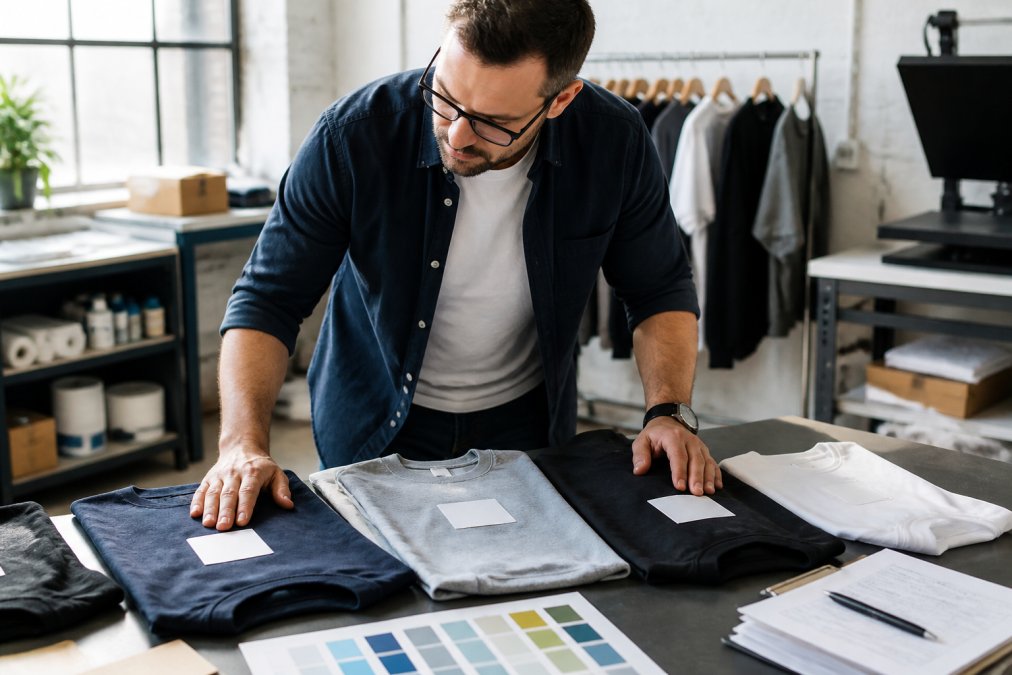
The choice between direct-to-garment and screen printing is the single most important technical decision when selecting a custom apparel partner.
Screen printing pushes ink through a mesh screen onto fabric. Each color requires a separate screen, creating setup costs. Once screens are ready, per-unit cost drops significantly with volume. A 500-unit order of a three-color design costs less per shirt than a 50-unit order because setup cost spreads across more units. Screen printing produces vibrant, long-lasting prints because ink bonds through heat curing. It handles thick inks, special effects, and any fabric color. The limitation: complex designs with many colors or fine photographic detail become expensive because each color needs its own screen.
DTG printing skips screen setup. An inkjet head sprays ink directly onto the garment. There's no minimum order, no setup fee, and no color penalty, a five-color photorealistic print costs the same per unit as a solid color. This makes DTG perfect for testing designs, small orders, and intricate artwork. Per-unit costs run higher than screen printing at scale. A 500-unit order of simple solid-color tees will always be cheaper via screen printing. DTG shines when you need flexibility, fast turnaround, or design complexity that would require multiple screens.
The decision framework: If you're ordering 100+ units of a consistent design, screen printing usually wins on cost. If you're ordering under 50 units, testing designs, or printing photorealistic or multi-color artwork, DTG wins on simplicity and flexibility. For anything in between, run the math with your vendor because break-even points vary.
Action Designs and RushOrderTees both offer both methods, letting you choose based on your actual project needs.
Custom Apparel Companies With No Minimums
Minimum order quantities force businesses into bad choices: ordering more than needed, committing to untested designs, or delaying campaigns while waiting to hit quantity thresholds.
RushOrderTees has built its business around eliminating minimums. You can order one shirt or 1,000 without penalty. This matters when testing designs before committing to volume, replacing damaged merchandise mid-campaign, or fulfilling small custom orders. Per-unit cost doesn't drop as dramatically as with screen printing vendors, but you're not forced to choose between cost efficiency and operational flexibility.
Printful and Printify operate on a print-on-demand model with zero minimums. You can sell one shirt through your e-commerce store, and they handle printing and fulfillment. This eliminates inventory risk entirely. Per-unit costs are higher because there's no volume discount, and you're paying for fulfillment services on top of printing cost.
Scalable Press offers no minimums across their entire product line. You can order a single DTG-printed shirt for roughly $5.50 (white) to $7.75 (dark), plus shipping.
Apliiq has no minimums for dropship orders, letting you test designs with zero inventory risk.
Bonfire eliminates minimums for campaign-based orders. You set up a campaign, collect orders over a set period, and Bonfire handles fulfillment. This works well for fundraising, group orders, and community campaigns where you don't know the final quantity upfront.
The no-minimum landscape is mature now. The real question isn't whether a vendor offers no minimums, most do, but whether their per-unit pricing, quality standards, and fulfillment speed work for your use case.
Print-on-Demand vs. Bulk Screen Printing: What Works When
These are fundamentally different business models, and choosing the wrong one creates friction throughout your operation.
Print-on-demand means you don't hold inventory. A customer orders a custom hoodie through your store, the vendor manufactures and ships it directly to them. You pay per unit only for what sells. This eliminates inventory risk, cash flow constraints, and storage headaches. It's perfect for e-commerce businesses, small brands testing the market, and anyone who can't predict demand. Per-unit costs are higher because there's no volume discount, and you have no control over production timing or quality.
Bulk screen printing means you order inventory upfront. You print 500 tees, store them, and sell them over time. Per-unit cost is much lower because you're using volume discounts and amortizing setup costs. This works if you have predictable demand, sufficient cash flow to buy inventory, and storage space. It's the right choice for corporate merchandise, employee uniforms, retail products, and campaigns where you know the quantity upfront.
The hybrid approach, which Action Designs supports, lets you supply your own garments or have them source blanks, then handle customization. This gives you the cost benefits of bulk ordering while maintaining flexibility on timing and specifications.
For e-commerce stores with variable demand, print-on-demand (via Printful or Printify) eliminates risk. For outfitting a team, fulfilling a large event, or building a product line, bulk screen printing from RushOrderTees, Custom Ink, or Action Designs delivers better economics.
Key Factors: Turnaround Times, Pricing, and Minimums
Three variables compress every custom apparel decision: how fast you need it, what it costs, and whether there's a minimum order.
Turnaround time ranges from 1-3 business days (rush options) to 10-15 business days (standard). Scalable Press and RushOrderTees offer fast turnaround because they maintain multiple production centers and don't batch orders. If you're planning a trade show in two weeks, fast turnaround is non-negotiable. If you're planning six months out, standard turnaround is fine and often cheaper.
Pricing structures vary dramatically. Some vendors charge per-unit costs only. Others add setup fees, artwork fees, or digitization fees (for embroidery). Custom Ink advertises "all-inclusive pricing with no hidden fees," which matters for predictability. RushOrderTees uses rolling volume pricing, each additional shirt costs slightly less. Printful and Printify charge per-product costs plus shipping, which can add up on small orders. Action Designs uses quote-based pricing, giving you a custom proposal based on your specific project, method, quantity, and timeline.
Watch for hidden costs: design revision cycles. If a vendor requires 10 back-and-forth emails to finalize your design, you've added 15 hours of your time. Custom Ink includes professional design review, accelerating the process. Bonfire's platform is self-service, which is fast if you know what you want but slower if you need design guidance.
Minimum order quantities matter most when testing designs or running small campaigns. Most modern vendors have eliminated hard minimums, but some still require 12 units for embroidery or 24 units for certain print methods. RushOrderTees, Scalable Press, and print-on-demand platforms allow true one-off orders.
The math: A 200-unit order of a three-color design costs roughly $8-$12 per unit via screen printing. The same design via DTG costs roughly $10-$15 per unit. Via print-on-demand, it's $15-$25 per unit because you're paying for fulfillment services. At 50 units, screen printing often isn't an option (setup costs make it uneconomical), so DTG or print-on-demand becomes the only choice.
Compare vendors on your actual order size, design complexity, and timeline. Don't optimize for the wrong variable, the cheapest per-unit cost is worthless if they can't deliver in your timeframe or require a 500-unit minimum.
Conclusion
Switching from Threadbird makes sense when their model stops fitting your operation, whether that's hitting minimum order limits, needing production methods they don't offer, or spending too much time managing design and fulfillment. The alternatives span multiple models: print-on-demand platforms for e-commerce flexibility, bulk vendors for cost efficiency at scale, specialized providers for unique capabilities like embroidery or DTF printing, and full-service partners that handle everything from design consultation to fulfillment.
The best choice depends on three factors: your order volume and frequency, design complexity, and how much you value production flexibility versus cost optimization. For businesses needing versatile printing techniques, professional-grade quality, and the ability to handle everything from single custom shirts to full collections, Action Designs offers screen printing, embroidery, DTG, and DTF capabilities with the flexibility to work with your specifications or source garments for you. GET A QUOTE to see how their scalable production approach fits your custom apparel needs.
Frequently Asked Questions
What's the main difference between DTG and screen printing for custom apparel?
DTG (direct-to-garment) prints designs directly onto fabric using inkjet technology, ideal for detailed, multi-color designs and small orders with no setup fees. Screen printing uses mesh screens and ink, offering superior durability and cost-efficiency for bulk orders. DTG excels at fine detail and color accuracy; screen printing delivers vibrant, long-lasting results on high volumes. Your choice depends on order size, design complexity, and budget.
How do I know if a custom apparel company will actually deliver quality that lasts?
Request samples before committing to a full order. Ask about ink durability testing, fabric weight specifications, and curing processes. Look for companies that document their quality control procedures and can provide references from similar projects. Many reputable vendors will walk you through their process and address specific durability concerns.
Which custom apparel companies with no minimums are best for small orders?
RushOrderTees, Scalable Press, and Printful all accept single-unit orders with no minimums. RushOrderTees and Scalable Press offer fast turnaround (1-3 business days) and rolling volume pricing. Printful integrates with e-commerce platforms and handles fulfillment automatically. Action Designs also works with small quantities while maintaining quality across screen printing, embroidery, DTG, and DTF methods. Compare based on your design complexity and delivery timeline.
How do I choose between print-on-demand platforms and traditional bulk screen printing?
Use print-on-demand (Printful, Printify, Bonfire) when you need flexibility, no upfront inventory costs, or integration with your online store. Choose bulk screen printing when ordering 100+ units, prioritizing cost per unit and long-term durability. Print-on-demand works for variable designs and small runs; bulk printing suits consistent branding, uniforms, and large campaigns. Consider your order frequency, design changes, and profit margin requirements.
This article was written using GrandRanker